
Loading...
Serving Santa Fe, NM and surrounding areas. (505) 666-0491
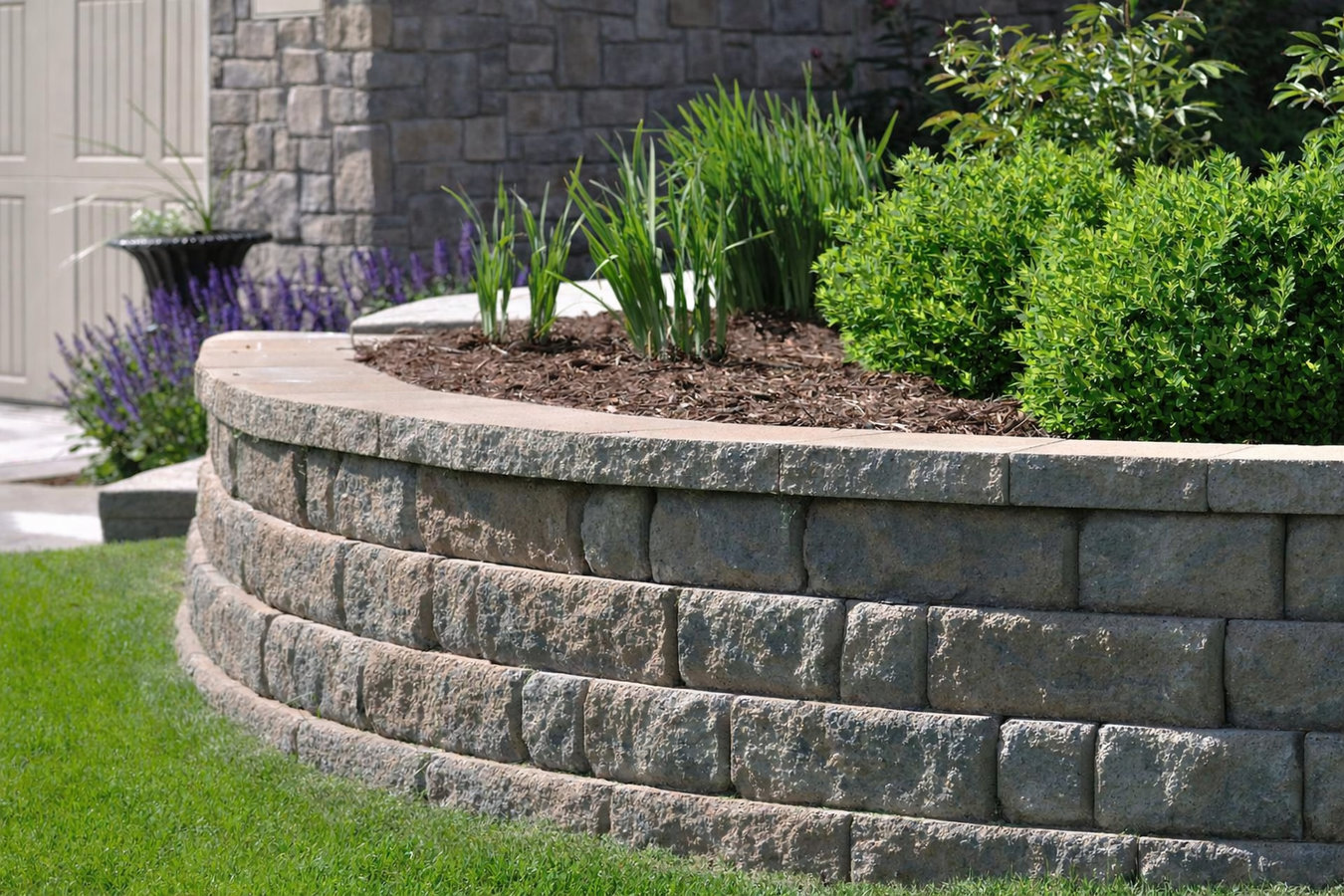
Santa Fe slopes lose ground every monsoon season when there is nothing holding them back. We build retaining walls that protect your yard, redirect water, and create usable outdoor space.
Retaining wall construction in Santa Fe holds back soil on slopes using natural stone, concrete block, or similar materials, with a well-built foundation set below the local frost line and drainage installed behind the wall to handle monsoon-season rainfall - most residential projects run two to five days for a standard 20- to 40-foot wall.
Without a retaining wall, a sloped yard loses ground every time it rains. In Santa Fe, the summer monsoon makes that process fast and visible - bare patches appear on hillsides in July and soil piles up where it does not belong by August. A properly built wall stops that movement and can turn an unusable slope into a flat, usable terrace.
Once your slope is stabilized, the question often turns to what to do with the new flat space. Our masonry restoration work can address any older walls or hardscape nearby that need attention at the same time, keeping the whole property looking consistent.
If you notice bare patches on a hillside in your yard after a storm, or if you find soil piling up at the base of a slope, your yard is losing ground. In Santa Fe, the summer monsoon season makes this especially visible - a slope that looks fine in June can show real erosion by August. A retaining wall stops that process and keeps your yard where it belongs.
If you have an older wall that is starting to tilt toward the yard, or if you can see cracks running through the blocks or stones, the wall is under stress it can no longer handle. This is common in Santa Fe properties built in the 1970s and 1980s, when drainage behind walls was often minimal. A leaning wall does not fix itself - it continues to move until it fails.
If part of your outdoor space is too steep to walk on comfortably, too unstable to plant in, or too uneven for furniture, a retaining wall can create a flat, usable terrace. Many homeowners in Santa Fe's foothills and east side neighborhoods have yards that slope significantly, and a well-placed wall can turn an unusable hillside into a real outdoor living area.
If you notice water collecting against your house after a storm, a slope above the foundation may be directing runoff toward the structure. Over time, that moisture can damage your foundation and create problems inside the home. A retaining wall positioned uphill from the foundation can redirect that water away before it reaches the house.
We build retaining walls from the foundation up - which means excavating below the frost line, setting the base on compacted soil, and installing drainage gravel and outlets behind the wall before a single course of stone or block goes in. That drainage step is the one most contractors rush or skip, and it is the primary reason walls fail in Santa Fe after a few monsoon seasons. Every wall we build includes this work as a standard part of the project, not an add-on.
Taller walls in Santa Fe often require a city permit, and we handle that application process from start to finish. If your wall will stand alongside a driveway or walkway surface, our concrete block walls service covers the structural elements that connect retaining work to vertical boundaries on your property - so every part of the project is planned together rather than added on piecemeal.
Suits homeowners who want a wall that blends with Santa Fe's adobe and earth-tone character, using locally appropriate stone that weathers beautifully over time.
Suits homeowners who need a taller or more structurally demanding wall at a lower cost than natural stone, without sacrificing durability.
Suits properties with significant slope changes where a single wall is not enough - multiple stepped walls that turn a hillside into usable outdoor levels.
Santa Fe's combination of clay-heavy soils and intense summer monsoons creates conditions that put retaining walls under serious stress. The soils in much of the city expand when wet during monsoon season and contract when dry the rest of the year. That constant movement adds lateral pressure against any wall that is not properly drained and founded deep enough. At 7,000 feet elevation, the ground also freezes to a meaningful depth each winter - typically 18 to 24 inches - and a foundation that does not go below that depth will shift as the ground freezes and thaws year after year. The USDA Natural Resources Conservation Service has extensive guidance on soil erosion control, and the principles apply directly to residential slopes like the ones common in Santa Fe's hillside neighborhoods.
Many properties in Santa Fe's foothills and east side sit on slopes that have never had proper stabilization, and properties built in earlier decades often have older walls with no drainage behind them. We work throughout the area, including hillside communities like Tesuque and Cuyamungue, where sloped terrain and proximity to arroyos make drainage-focused wall construction especially important.
When you reach out, we respond within one business day and schedule a free on-site visit. We need to see the slope, the soil, and how water moves across your yard before giving you a meaningful number - a phone quote for this type of work is not reliable.
After the site visit, you receive a written estimate that breaks out materials, labor, and permit costs. If your wall will be over four feet tall, we walk you through the permit process and timeline for the City of Santa Fe - typically one to three weeks for review.
If a permit is required, we submit the application and wait for approval before scheduling the crew. Once the permit is in hand, you get a start date and a clear schedule. We also let you know what needs to be cleared from the work area before the first day.
The crew excavates the base, builds the wall course by course with drainage material behind it, and finishes by backfilling and grading the slope. If a city inspection is required, we schedule and handle it. Before leaving, we walk the finished wall with you and explain what to watch for each monsoon season.
Free on-site assessment. Written quote before any work begins. Permit handling included when required.
(505) 666-0491At 7,000 feet, the ground freezes to 18 to 24 inches each winter. A wall foundation that sits above that depth will shift as the ground cycles through freeze and thaw. We set every foundation below the local frost line as a standard practice, not an upgrade.
Hydrostatic pressure from water trapped behind a wall is the leading cause of retaining wall failure in Santa Fe. Every wall we build includes gravel backfill and drainage outlets behind it, engineered to handle the volume of a monsoon afternoon. You will not see this work once the project is done, but it is what makes the wall last.
Walls over four feet in Santa Fe require a city permit, and skipping it creates problems when you sell the home. We handle the application, coordinate with the City of Santa Fe Development Services, and schedule the required inspection - so the process is ours to manage, not yours.
Local sandstone and flagstone are popular here for good reason - they look like they belong in this city. We know which materials complement the adobe and earth-tone character of different Santa Fe neighborhoods, and we guide you toward choices that will still look right in 20 years.
The two most common reasons retaining walls fail in Santa Fe are poor drainage and a foundation that was not set deep enough for the local frost line. Both are problems we address on every project, which is why walls we build are still standing straight after years of monsoon seasons and hard winters.
Address older walls and hardscape on your property that need repair or restoration at the same time your new retaining wall goes in.
Learn MoreVertical boundary walls and structural block construction that often complements retaining work on the same property.
Learn MoreEvery summer, slopes without proper support lose more ground. Call now to schedule your free on-site estimate and get on the calendar.